 Tank DestroyerSniperReward
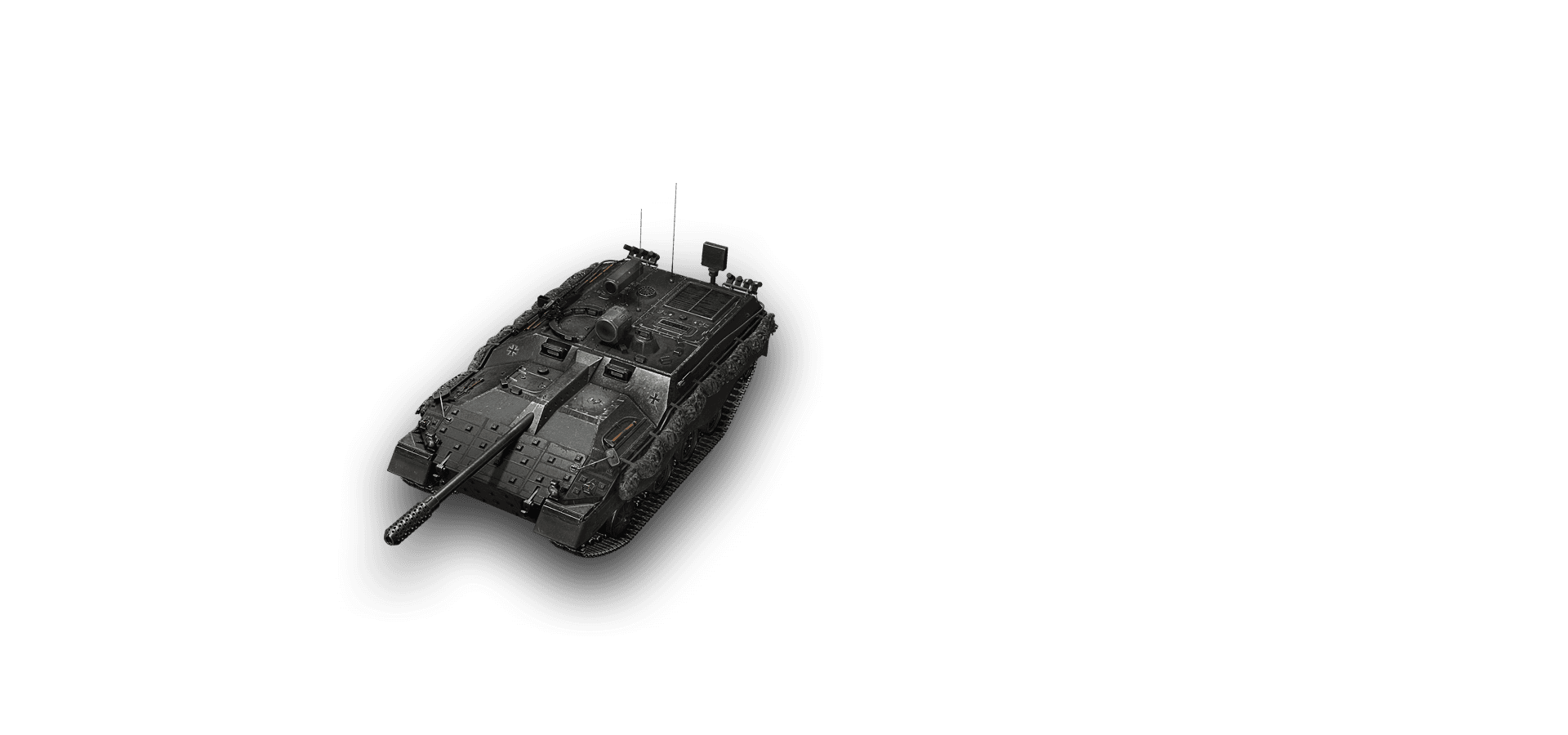
Windhund
World of Tanks EU statistics for the VIII Germany tank destroyer Windhund.
Characteristics of the Windhund
Firepower
- Damage
- 320hp
- … vs modules
- 150hp
- Penetration
- 271mm
- … at 500m
- 253mm
- DPM
- 2,430
- Reload
- 7.90s
- Rate of fire
- 7.59/min
- Aim time
- 2.50s
- Dispersion
- 0.380m
- … moving
- 0.300
- … hull traverse
- 0.200
- … turret traverse
- 0.100
- … after firing
- 15.00×
- … gun damaged
- 2.00×
- Shell velocity
- 1,100m/s
- Max range
- 720m
- Caliber
- 105mm
- … potential damage
- 16,000hp
- Shell cost
- 719
- … full ammo
- 35,950
Mobility
- Top speed
- 50km/h
- Reverse speed
- 30km/h
- Engine power
- 700hp
- Power/weight
- 21.9hp/t
- Hull traverse
- 44.0°/s
- Turret traverse
- 44.0°/s
- … hard
- 1.00
- … medium
- 1.20
- … soft
- 2.00
- … hard
- 50.0km/h
- … medium
- 50.0km/h
- … soft
- 40.0km/h
- … hard
- 44.0°/s
- … medium
- 36.7°/s
- … soft
- 22.0°/s
Survivability
- Hit points
- 1,300hp
- … front
- 50mm
- … side
- 30mm
- … rear
- 30mm
- Track armor
- 20mm
- Fire chance
- 15.0%
- Track repair time
- 11.70s
- … ammo rack
- 210 / 158hp
- … track
- 220 / 165hp
- … engine
- 275 / 138hp
- … fuel tank
- 175 / 70hp
- … turret ring
- 155 / 78hp
- … viewport
- 100 / 50hp
Spotting & other
- View range
- 350m
- Signal range
- 570m
- … stationary
- 21.8%
- … moving
- 13.1%
- Weight
- 32.0t
Ammunition
Equipment
Consumables
Directives
Field Modifications
Crew Skills

 Commander / Radio Operator / Loader
 Gunner
 Driver
Modules of the Windhund


Historical reference of the Windhund
In the mid-1960s, inspired by the Swedish Strv S, the Bundeswehr decided to build its own equivalent based on German developments. In 1966, KraussMaffei and Rheinmetall were offered a competition to design a turretless tank with a gun hard-mounted to the hull. Three years later, Rheinmetall presented a prototype, while KraussMaffei withdrew from the competition to focus on producing and upgrading Leopard 1 tanks. However, the new vehicle turned out very expensive to produce, only costing a little less than the Kpz. 70 main battle tank, the program for which was terminated because of high costs. Tests continued until 1972, after which the project was closed.
Videos of the Windhund
No community video for the Windhund yet. Suggest one and it shows up here once a moderator has looked at it.
Tanks close to the Windhund
Same standing among their own tier- 88%match
 Kanonenjagdpanzer 2VIII
Closest on concealment and gun handling, furthest on mobility
- 85%match
 Taurus CATVIII
Closest on concealment and gun handling, furthest on playstyle
- 83%match
 Strv 103-0IX
Closest on gun handling and concealment, furthest on mobility
- 83%matchStrv S1VIII
Closest on gun handling and concealment, furthest on mobility
- 83%match
 SU-122VIX
Closest on concealment and survivability, furthest on mobility
- 82%matchObject KustVIII
Closest on concealment and gun handling, furthest on firepower