 Medium TankSupportPremium
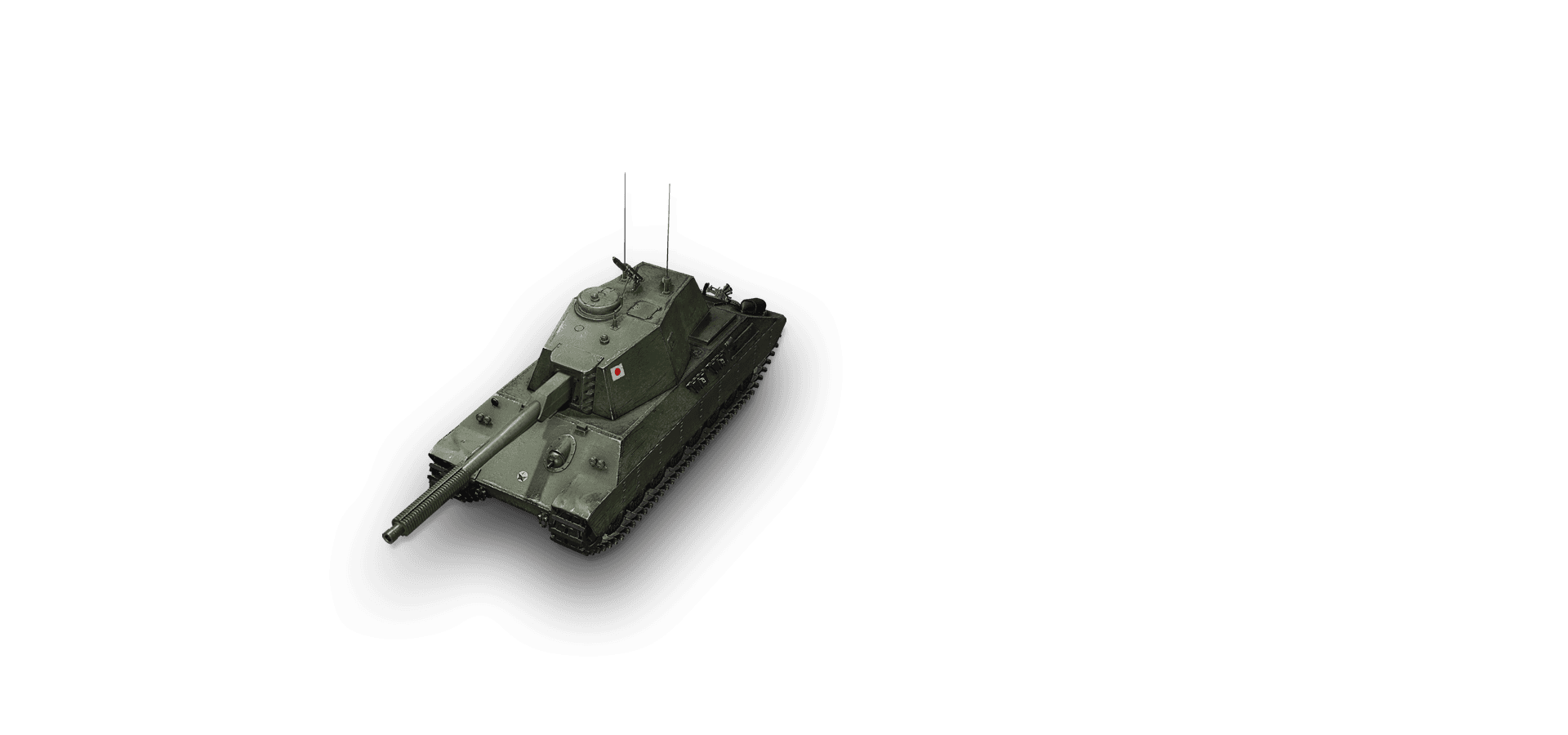
Kame
World of Tanks EU statistics for the IX Japan medium tank Kame.
Characteristics of the Kame
Firepower
- Damage
- 330hp
- … vs modules
- 150hp
- Penetration
- 235mm
- … at 500m
- 225mm
- DPM
- +12,063
- Reload
- 42.00s
- … intra-clip
- 1.50s
- … clip damage
- 1,650hp
- Rate of fire
- 6.25/min
- Aim time
- 1.90s
- Dispersion
- 0.300m
- … moving
- 0.240
- … hull traverse
- 0.240
- … turret traverse
- 0.100
- … after firing
- 3.00×
- … gun damaged
- 2.00×
- Shell velocity
- 1,200m/s
- Max range
- 720m
- Caliber
- 105mm
- … potential damage
- 16,500hp
- Shell cost
- 715
- … full ammo
- 35,750
Mobility
- Top speed
- 55km/h
- Reverse speed
- 18km/h
- Engine power
- 700hp
- Power/weight
- 20.0hp/t
- Hull traverse
- 45.0°/s
- Turret traverse
- 40.0°/s
- … hard
- 1.00
- … medium
- 1.20
- … soft
- 2.00
- … hard
- 55.0km/h
- … medium
- 55.0km/h
- … soft
- 36.6km/h
- … hard
- 45.0°/s
- … medium
- 37.5°/s
- … soft
- 22.5°/s
Survivability
- Hit points
- 1,650hp
- … front
- 100mm
- … side
- 50mm
- … rear
- 30mm
- … front
- 200mm
- … side
- 50mm
- … rear
- 40mm
- Track armor
- 20mm
- Fire chance
- 15.0%
- Track repair time
- 11.70s
- … ammo rack
- 230 / 173hp
- … track
- 240 / 180hp
- … engine
- 310 / 155hp
- … fuel tank
- 200 / 70hp
- … turret ring
- 170 / 85hp
- … viewport
- 110 / 55hp
Spotting & other
- View range
- 390m
- Signal range
- 670m
- … stationary
- 8.9%
- … moving
- 6.7%
- Weight
- 35.0t
Ammunition
Equipment
Consumables
Directives
Field Modifications
Crew Skills

 Commander / Radio Operator
 Gunner
 Driver
 Loader
Modules of the Kame


Historical reference of the Kame
A project for a Japanese medium tank developed in 1945 to counteract Allied and Soviet medium and heavy tanks. The designers strove to apply the most successful technical innovations of various tank-building schools. The vehicle had torsion-bar suspension, good sloped hull armor, and a powerful gun. Due to its peculiar turtle-shell-like appearance, the new tank was given the name Kame (Japanese for "turtle"). Engineers had the separate task of increasing the rate of fire. To do this, they mounted the gun with a special external radiator meant to significantly reduce barrel heating. The new tank had good prospects, but the Japanese did not manage to build a prototype before their surrender.
Videos of the Kame
No community video for the Kame yet. Suggest one and it shows up here once a moderator has looked at it.
Tanks close to the Kame
Same standing among their own tier- 88%match
 AmbassadorIX
Closest on survivability and playstyle, furthest on gun handling
- 87%match
 Vz. 62 JasanIX
Closest on mobility and survivability, furthest on concealment
- 86%match
 Char MuratIX
Closest on playstyle and survivability, furthest on concealment
- 86%match
 MBT-BX
Closest on concealment and mobility, furthest on gun handling
- 85%matchLeoxIX
Closest on concealment and gun handling, furthest on firepower
- 84%match
 PredatoreIX
Closest on playstyle and concealment, furthest on firepower