 Tank DestroyerVersatileReward
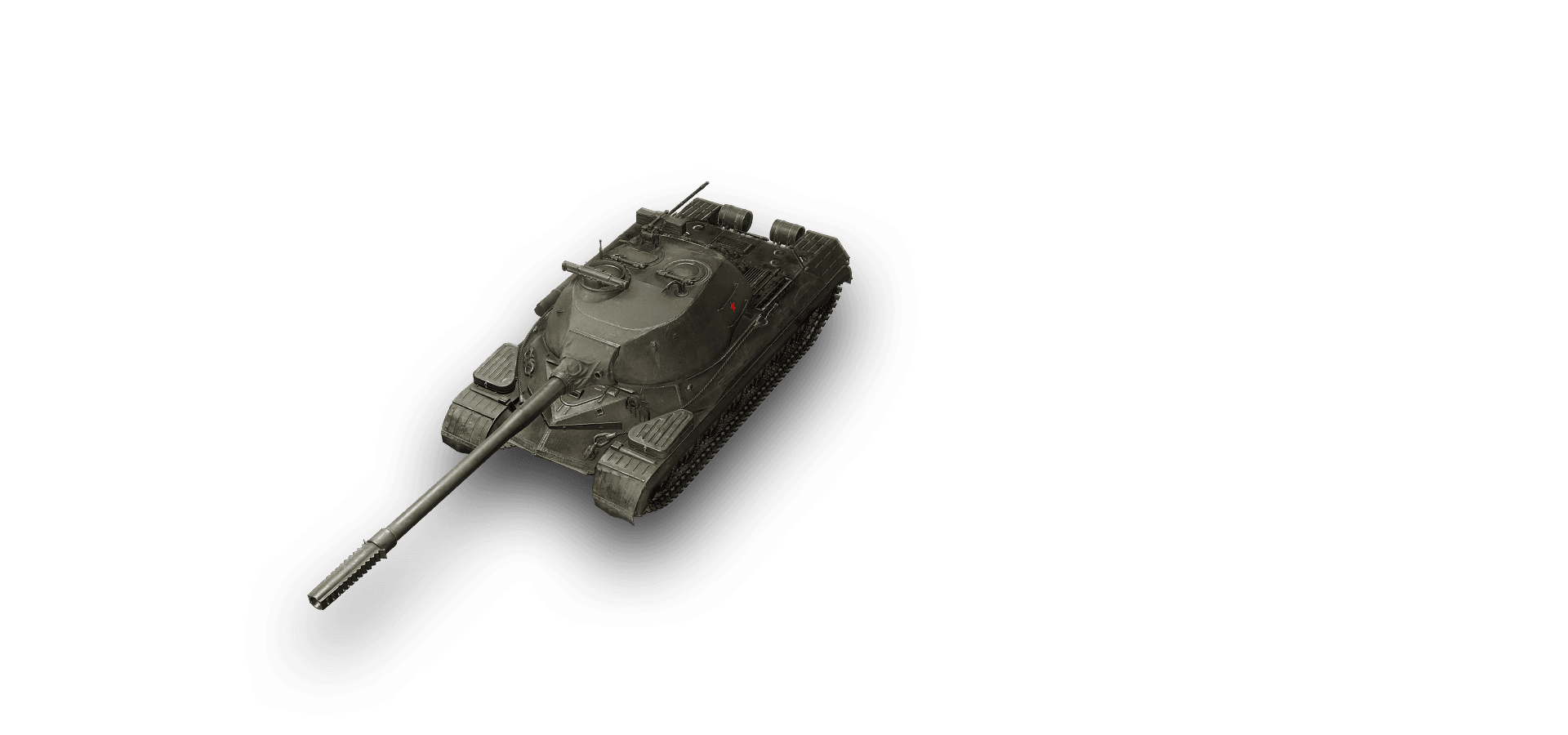
Object 268 Version V
World of Tanks EU statistics for the X U.S.S.R. tank destroyer Object 268 Version V.
Characteristics of the Object 268 Version V
Firepower
- Damage
- 750hp
- … vs modules
- 203hp
- Penetration
- 303mm
- … at 500m
- 293mm
- DPM
- 2,296
- Reload
- 19.60s
- Rate of fire
- 3.06/min
- Aim time
- 3.00s
- Dispersion
- 0.360m
- … moving
- 0.220
- … hull traverse
- 0.220
- … turret traverse
- 0.200
- … after firing
- 4.00×
- … gun damaged
- 2.00×
- Shell velocity
- 950m/s
- Max range
- 720m
- Caliber
- 152mm
- … potential damage
- 22,500hp
- Shell cost
- 1,650
- … full ammo
- 49,500
Mobility
- Top speed
- 48km/h
- Reverse speed
- 15km/h
- Engine power
- 750hp
- Power/weight
- 15.0hp/t
- Hull traverse
- 20.0°/s
- Turret traverse
- 18.0°/s
- … hard
- 1.80
- … medium
- 2.00
- … soft
- 2.60
- … hard
- 30.5km/h
- … medium
- 27.4km/h
- … soft
- 21.1km/h
- … hard
- 20.0°/s
- … medium
- 18.0°/s
- … soft
- 13.8°/s
Survivability
- Hit points
- 2,000hp
- … front
- 120mm
- … side
- 90mm
- … rear
- 40mm
- … front
- 230mm
- … side
- 90mm
- … rear
- 60mm
- Track armor
- 20mm
- Fire chance
- 15.0%
- Track repair time
- 12.03s
- … ammo rack
- 210 / 140hp
- … track
- 250 / 190hp
- … engine
- 370 / 185hp
- … fuel tank
- 200 / 80hp
- … turret ring
- 170 / 85hp
- … viewport
- 120 / 60hp
Spotting & other
- View range
- 360m
- Signal range
- 720m
- … stationary
- 15.4%
- … moving
- 9.2%
- Weight
- 50.0t
Ammunition
Equipment
Consumables
Directives
Field Modifications
Crew Skills

 Commander / Radio Operator
 Driver
 Gunner
 Loader
 Loader
Modules of the Object 268 Version V


Historical reference of the Object 268 Version V
A tank destroyer based on the Object 730 (T-10) tank. Developed in the early 1950s. The project allowed a gun to be mounted in a rotating turret, enabling all-round horizontal fire. Most ammunition was placed in the rear of the turret in order to improve crew operating conditions. The project was cancelled, because expensive and complicated modifications of many basic components were required.
Videos of the Object 268 Version V
No community video for the Object 268 Version V yet. Suggest one and it shows up here once a moderator has looked at it.
Tanks close to the Object 268 Version V
Same standing among their own tier- 86%match
 AMX 50 Foch (155)X
Closest on firepower and concealment, furthest on survivability
- 85%match
 Object 268X
Closest on concealment and firepower, furthest on gun handling
- 83%match
 WZ-113G FTX
Closest on firepower and concealment, furthest on gun handling
- 83%match
 T110E4X
Closest on firepower and mobility, furthest on survivability
- 82%match
 DBV-152X
Closest on concealment and firepower, furthest on survivability
- 82%matchObject 268 Version 4X
Closest on concealment and firepower, furthest on playstyle