
 Heavy TankVersatilePremium
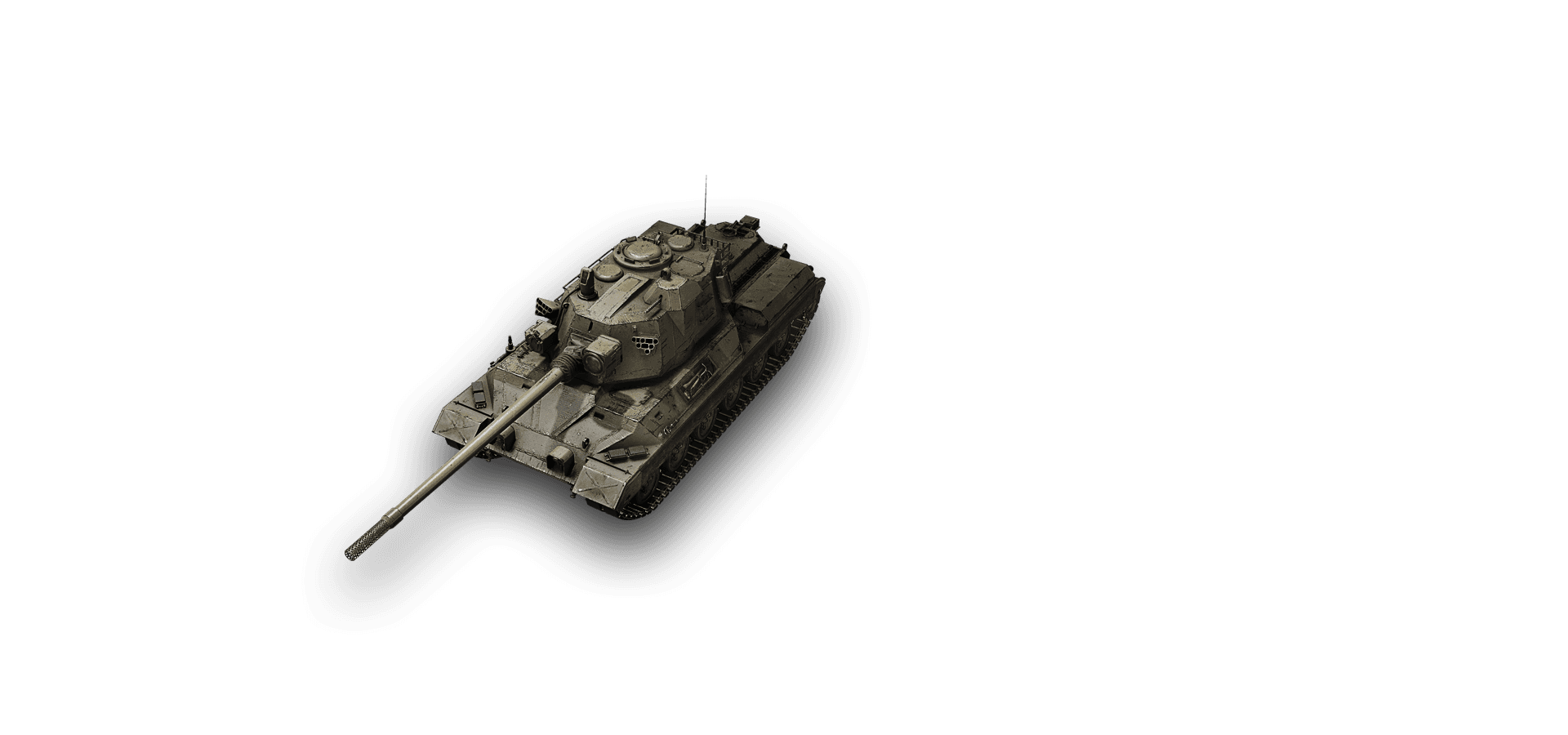
Chi-Se
World of Tanks EU statistics for the VIII Japan heavy tank Chi-Se.
Characteristics of the Chi-Se
Firepower
- Damage
- 330hp
- … vs modules
- 150hp
- Penetration
- 220mm
- … at 500m
- 209mm
- DPM
- 2,200
- Reload
- 9.00s
- Rate of fire
- 6.67/min
- Aim time
- 2.20s
- Dispersion
- 0.370m
- … moving
- 0.130
- … hull traverse
- 0.130
- … turret traverse
- 0.080
- … after firing
- 3.00×
- … gun damaged
- 2.00×
- Shell velocity
- 1,000m/s
- Max range
- 720m
- Caliber
- 105mm
- … potential damage
- 19,800hp
- Shell cost
- 616
- … full ammo
- 36,960
Mobility
- Top speed
- 40km/h
- Reverse speed
- 14km/h
- Engine power
- 940hp
- Power/weight
- 17.1hp/t
- Hull traverse
- 36.0°/s
- Turret traverse
- 35.0°/s
- … hard
- 1.00
- … medium
- 1.20
- … soft
- 2.00
- … hard
- 40.0km/h
- … medium
- 40.0km/h
- … soft
- 31.3km/h
- … hard
- 36.0°/s
- … medium
- 30.0°/s
- … soft
- 18.0°/s
Survivability
- Hit points
- 1,550hp
- … front
- 135mm
- … side
- 80mm
- … rear
- 60mm
- … front
- 210mm
- … side
- 100mm
- … rear
- 70mm
- Track armor
- 20mm
- Fire chance
- 20.0%
- Track repair time
- 11.70s
- … ammo rack
- 210 / 158hp
- … track
- 220 / 165hp
- … engine
- 275 / 138hp
- … fuel tank
- 175 / 70hp
- … turret ring
- 155 / 78hp
- … viewport
- 100 / 50hp
Spotting & other
- View range
- 390m
- Signal range
- 570m
- … stationary
- 4.6%
- … moving
- 2.3%
- Weight
- 55.0t
Ammunition
Equipment
Consumables
Directives
Field Modifications
Crew Skills

 Commander / Loader
 Gunner
 Driver
 Radio Operator
Modules of the Chi-Se


Historical reference of the Chi-Se
In 1943, a delegation of Imperial Japanese Army representatives attended a demonstration of the German Pz.Kpfw. Tiger Ausf. E heavy tank in Kummersdorf near Berlin. The Tiger seriously impressed the military, and so they decided to create a similar vehicle for the Japanese Army. The design called for using many technological solutions from the German school of tank-building, and the vehicle could have turned out to be quite successful. However, by 1945, the situation in the country had become extremely difficult and building the tank was problematic. For that reason, the fate of the last Japanese heavy tank during wartime was sealed.
Videos of the Chi-Se
No community video for the Chi-Se yet. Suggest one and it shows up here once a moderator has looked at it.
Tanks close to the Chi-Se
Same standing among their own tier- 87%match
 M-VI-Y (120)IX
Closest on concealment and playstyle, furthest on firepower
- 87%match
 E 65 ZwillingVIII
Closest on concealment and survivability, furthest on firepower
- 86%matchHWK 40IX
Closest on concealment and playstyle, furthest on gun handling
- 86%matchM-VII-YIX
Closest on concealment and playstyle, furthest on mobility
- 86%matchSPHTIX
Closest on concealment and playstyle, furthest on gun handling
- 85%match
 BrennosVIII
Closest on concealment and gun handling, furthest on playstyle