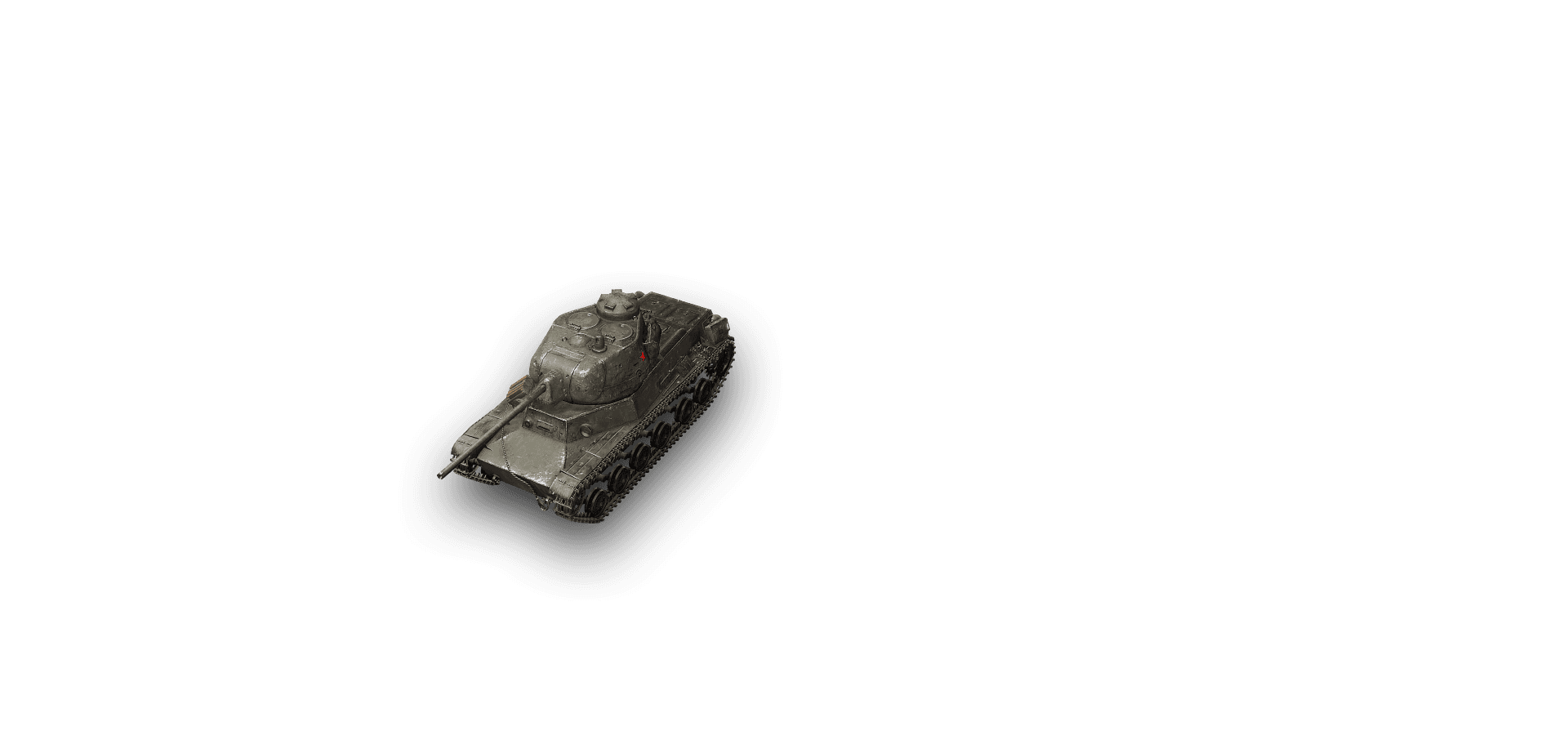

T-50-2 characteristics
Firepower
- Damage
- 85hp
- Penetration
- 118mm
- DPM
- 1,700
- Reload
- 3.00s
- Rate of fire
- 20.00/min
- Aim time
- 1.80s
- Accuracy
- 0.380m
- Dispersion moving
- 0.120
- Shell velocity
- 990m/s
- Caliber
- 57mm
- Gun depression
- 25°
- Gun elevation
- 7°
Mobility
- Top speed
- 65km/h
- Reverse speed
- 23km/h
- Engine power
- 550hp
- Power/weight
- 34.4hp/t
- Hull traverse
- 48.0°/s
- Turret traverse
- 52.0°/s
- Hard terrain
- 0.90
- Medium terrain
- 1.00
- Soft terrain
- 1.90
Survivability
- Hit points
- 520hp
- Hull armor (front)
- 37mm
- Turret armor (front)
- 52mm
- Fire chance
- 0%
- Ammo rack HP
- 140hp
- Track HP
- 120hp
Spotting & other
- View range
- 370m
- Signal range
- 730m
- Camo (still)
- 0.3%
- Camo (moving)
- 0.3%
- Weight
- 16.0t
T-50-2 historical reference
The T-50 is a light tank manufactured at the Kirov Plant in Leningrad. Development of a new light tank to replace the T-26 began in early 1940. In autumn, after studying the design of the Pz.Kpfw. III German medium tank, all technical requirements were laid out. The vehicle's design featured the commander's cupola with all-round observation, and the Commander stopped performing the functions of the Gunner and the Loader. The final requirements were developed in November 1940, and the new tank was designated T-50. At the beginning of 1941, one prototype was built at the Kirov Plant and underwent trials, but never saw service. The project was discontinued in favor of the T-50 developed at Factory No. 174.