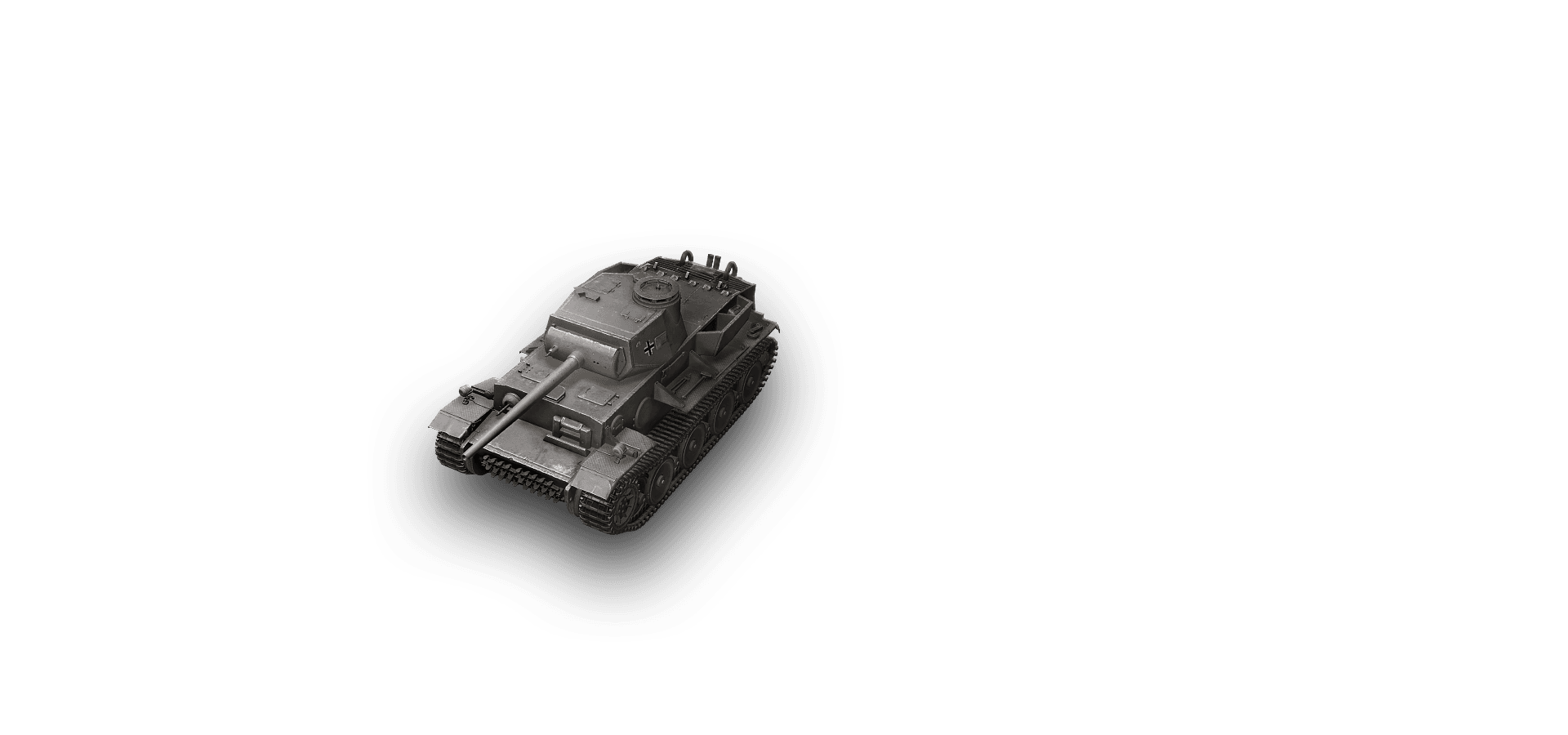

VK 36.01 (H) tech tree branch


VK 36.01 (H) characteristics
Firepower
- Damage
- 220hp
- Penetration
- 145mm
- DPM
- 1,913
- Reload
- 6.90s
- Rate of fire
- 8.70/min
- Aim time
- 2.30s
- Accuracy
- 0.360m
- Dispersion moving
- 0.220
- Shell velocity
- 773m/s
- Caliber
- 88mm
- Gun depression
- 15°
- Gun elevation
- 8°
Mobility
- Top speed
- 51km/h
- Reverse speed
- 14km/h
- Engine power
- 550hp
- Power/weight
- 13.1hp/t
- Hull traverse
- 33.0°/s
- Turret traverse
- 24.0°/s
- Hard terrain
- 1.20
- Medium terrain
- 1.40
- Soft terrain
- 2.90
Survivability
- Hit points
- 1,000hp
- Hull armor (front)
- 100mm
- Turret armor (front)
- 100mm
- Fire chance
- 0%
- Ammo rack HP
- 180hp
- Track HP
- 170hp
Spotting & other
- View range
- 370m
- Signal range
- 710m
- Camo (still)
- 0.1%
- Camo (moving)
- 0.1%
- Weight
- 42.0t
VK 36.01 (H) historical reference
An experimental German WWII heavy tank developed by Henschel. The vehicle was a further development of the VK 30.01 (H) project and a stage in the design process for the Tiger. A total of eight chassis and one prototype were built in 1942. During the development, various technical solutions were trialed. Some of them later served as a basis for German heavy tank designs during the WWII. The chassis was also used in armored recovery vehicles.