
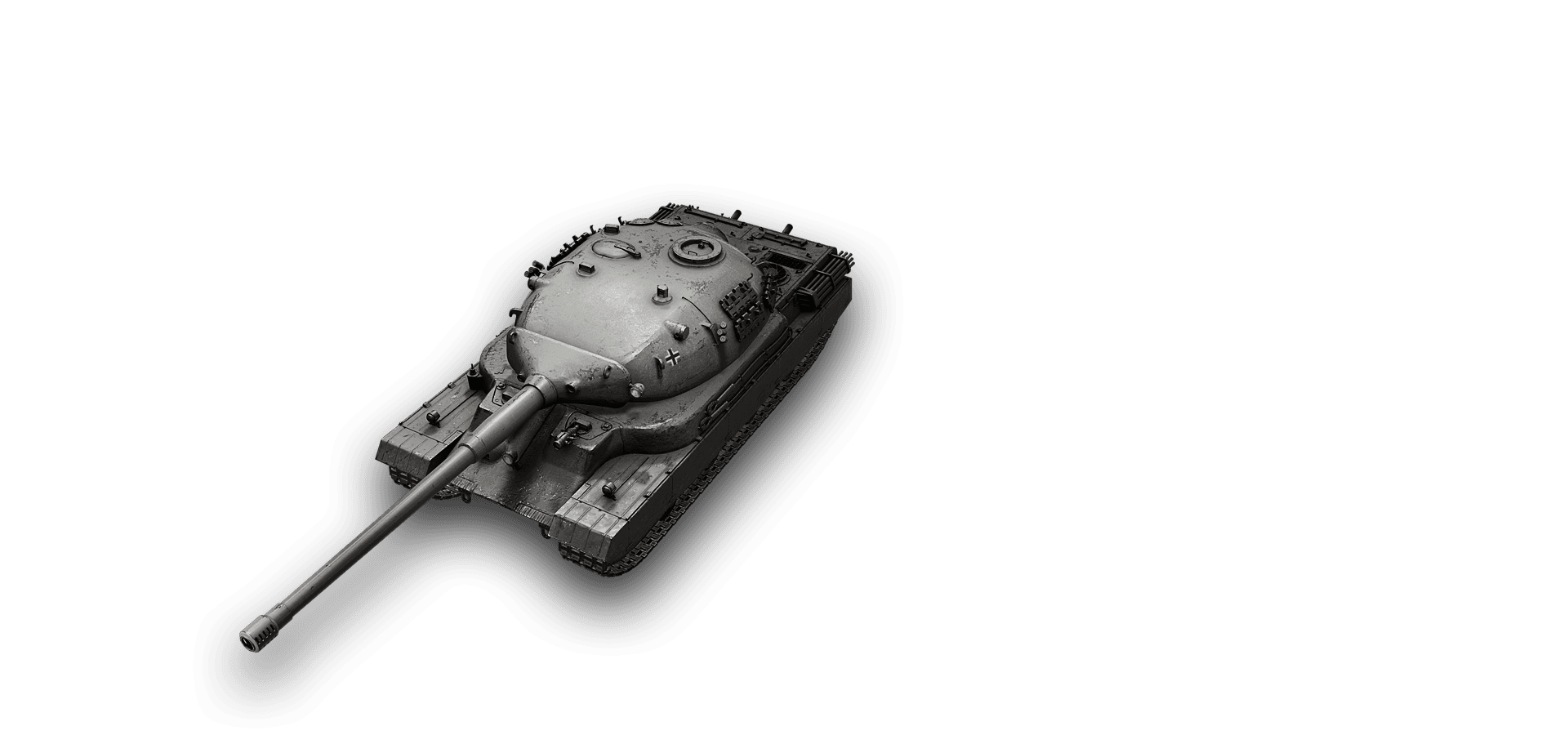
 Heavy tankAssaultReward
Schwertwal
World of Tanks NA statistics for the X GERMANY heavy tank Schwertwal.
Schwertwal characteristics
Firepower
- Damage
- 700hp
- … vs modules
- 203hp
- Penetration
- 259mm
- … at 500m
- 242mm
- DPM
- 2,500
- Reload
- 16.80s
- Rate of fire
- 3.57/min
- Aim time
- 3.00s
- Dispersion
- 0.400m
- … moving
- 0.220
- … hull traverse
- 0.220
- … turret traverse
- 0.100
- … after firing
- 4.00×
- … gun damaged
- 2.00×
- Shell velocity
- 800m/s
- Max range
- 720m
- Caliber
- 150mm
- … potential damage
- 35,000hp
- Shell cost
- 1,485
- … full ammo
- 74,250
Mobility
- Top speed
- 30km/h
- Reverse speed
- 12km/h
- Engine power
- 1,080hp
- Power/weight
- 12.0hp/t
- Hull traverse
- 23.0°/s
- Turret traverse
- 20.0°/s
- … hard
- 1.00
- … medium
- 1.20
- … soft
- 2.00
- … hard
- 30.0km/h
- … medium
- 30.0km/h
- … soft
- 21.9km/h
- … hard
- 23.0°/s
- … medium
- 19.2°/s
- … soft
- 11.5°/s
Survivability
- Hit points
- 2,500hp
- … front
- 180mm
- … side
- 110mm
- … rear
- 65mm
- … front
- 280mm
- … side
- 160mm
- … rear
- 120mm
- Track armor
- 30mm
- Fire chance
- 15.0%
- Track repair time
- 11.79s
- … ammo rack
- 250 / 188hp
- … track
- 250 / 188hp
- … engine
- 345 / 173hp
- … fuel tank
- 200 / 70hp
- … turret ring
- 185 / 93hp
- … viewport
- 120 / 60hp
Spotting & other
- View range
- 390m
- Signal range
- 750m
- … stationary
- 4.7%
- … moving
- 2.4%
- Weight
- 90.0t
Ammunition
Equipment
Consumables
Directives
Field Modifications
Crew Skills

 Commander
 Gunner
 Driver
 Radio Operator
 Loader
Schwertwal modules


Schwertwal historical reference
The tank was designed to eliminate the drawbacks and develop the benefits of the Panzerkampfwagen VI and VI Ausf. B (Tiger II). The main improvement was in the armor, with cast components making production less complicated. In addition, one key solution involved placing the engine and transmission in a single compartment, which improved the layout. The chassis kept a staggered roadwheel arrangement, ensuring smooth movement, while solid-propellant rocket engines from the R4M Orkan were mounted on the sides to aid self-recovery and provide better dynamics in urgent situations. Despite the progressive solutions, the tank had clear shortcomings, including less armor sloping at the front and low specific power, which limited its mobility and combat capabilities.
Schwertwal videos
No community video for the Schwertwal yet. Suggest one and it shows up here once a moderator has looked at it.