
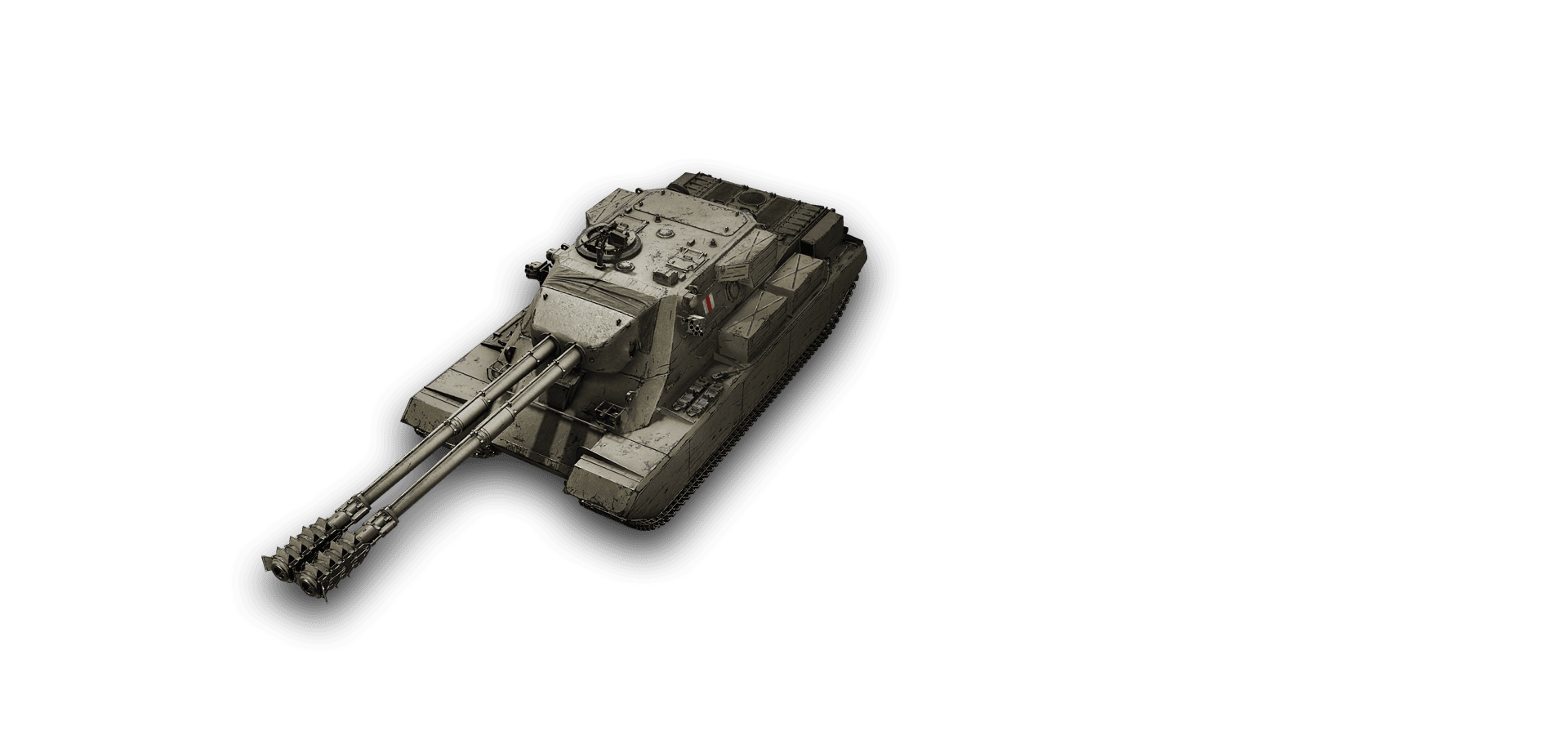
 Heavy tankVersatile
FV230 Canopener
World of Tanks NA statistics for the X UK heavy tank FV230 Canopener.
FV230 Canopener tech tree branch


FV230 Canopener characteristics
Firepower
- Damage
- 420hp
- … vs modules
- 165hp
- Penetration
- 258mm
- … at 500m
- 240mm
- DPM
- 2,520
- Reload
- 10.00s
- Rate of fire
- 6.00/min
- Aim time
- 2.00s
- Dispersion
- 0.330m
- … moving
- 0.160
- … hull traverse
- 0.160
- … turret traverse
- 0.120
- … after firing
- 4.00×
- … gun damaged
- 2.00×
- Shell velocity
- 1,050m/s
- Max range
- 720m
- Caliber
- 120mm
- … potential damage
- 33,600hp
- Shell cost
- 1,084
- … full ammo
- 86,720
Mobility
- Top speed
- 34km/h
- Reverse speed
- 12km/h
- Engine power
- 1,250hp
- Power/weight
- 13.9hp/t
- Hull traverse
- 22.0°/s
- Turret traverse
- 30.0°/s
- … hard
- 1.10
- … medium
- 1.30
- … soft
- 2.30
- … hard
- 34.0km/h
- … medium
- 34.0km/h
- … soft
- 22.1km/h
- … hard
- 22.0°/s
- … medium
- 18.6°/s
- … soft
- 10.5°/s
Survivability
- Hit points
- 2,250hp
- … front
- 200mm
- … side
- 100mm
- … rear
- 40mm
- … front
- 260mm
- … side
- 110mm
- … rear
- 70mm
- Track armor
- 20mm
- Fire chance
- 20.0%
- Track repair time
- 11.79s
- … ammo rack
- 250 / 188hp
- … track
- 250 / 188hp
- … engine
- 345 / 173hp
- … fuel tank
- 200 / 70hp
- … turret ring
- 185 / 93hp
- … viewport
- 120 / 60hp
Spotting & other
- View range
- 390m
- Signal range
- 750m
- … stationary
- 4.3%
- … moving
- 2.2%
- Weight
- 90.0t
Ammunition
Equipment
Consumables
Directives
Field Modifications
Crew Skills

 Commander / Radio Operator
 Gunner
 Driver
 Loader
 Loader
FV230 Canopener modules


FV230 Canopener historical reference
A project for a heavy coastal defense tank developed in the U.K. in the late 1950s as part of a program of coastal defense against suspected maritime landings. Impressive firepower, excellent armoring including strong sloped hull armor, and decent mobility made the vehicle a formidable opponent in combat against landing vessels. The gun was equipped with a mechanism comprising movable covers on the muzzle breaks to protect the bore from moisture. During the tank's development it became clear that anti-ship missiles would be the future of maritime battles and not artillery guns. As a result, the project was deemed to have no prospects and was discontinued before a prototype was built.
FV230 Canopener videos
No community video for the FV230 Canopener yet. Suggest one and it shows up here once a moderator has looked at it.