Medium tankAssaultPremium
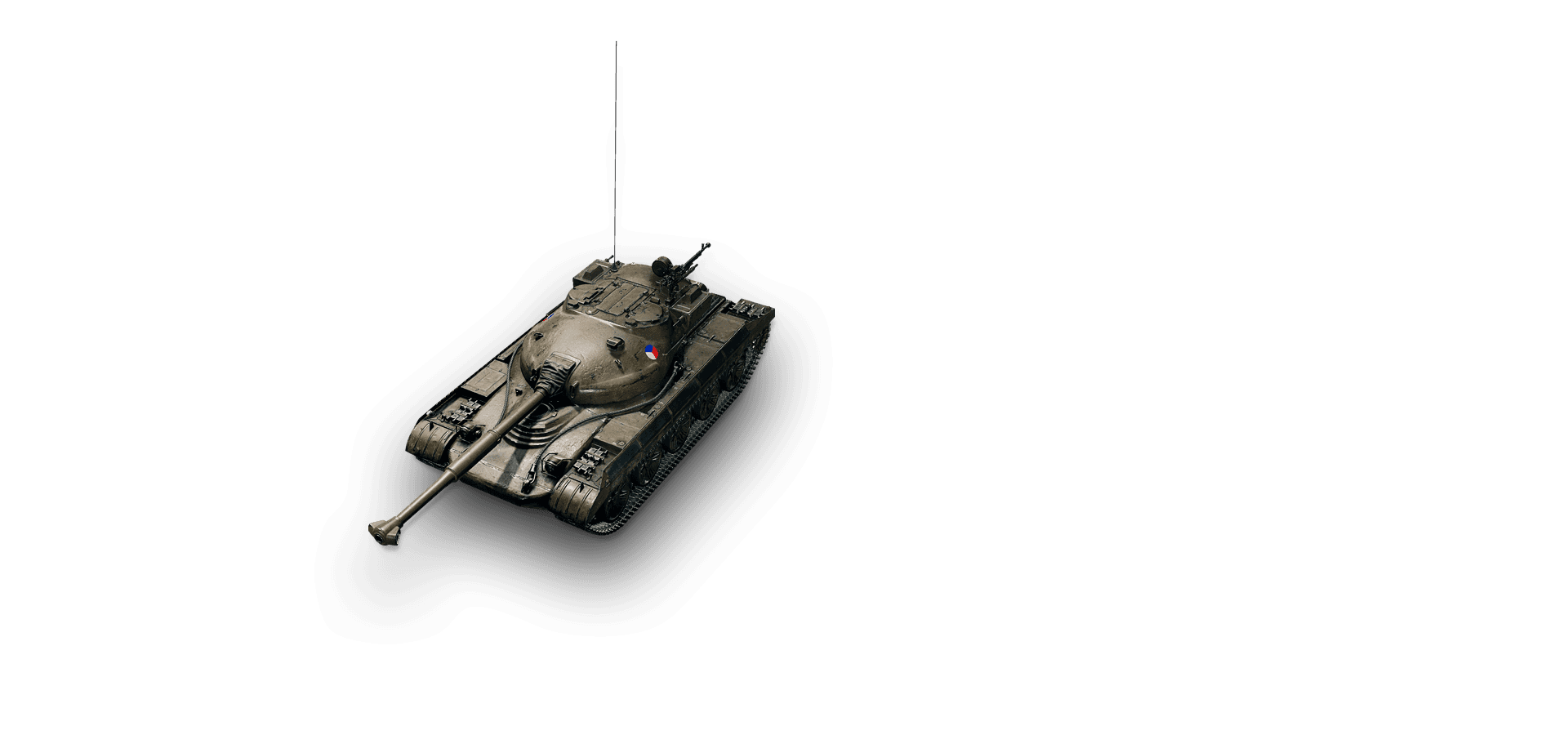
Ziqiang
World of Tanks ASIA statistics for the IX CHINA medium tank Ziqiang.
Ziqiang characteristics
Firepower
- Damage
- 200hp
- … vs modules
- 113hp
- Penetration
- 243mm
- … at 500m
- 230mm
- DPM
- 3,179
- Reload
- 6.80s
- … intra-clip
- 0.75s
- … clip damage
- 400hp
- Rate of fire
- 15.89/min
- Aim time
- 2.00s
- Dispersion
- 0.340m
- … moving
- 0.180
- … hull traverse
- 0.180
- … turret traverse
- 0.100
- … after firing
- 3.00×
- … gun damaged
- 2.00×
- Shell velocity
- 960m/s
- Max range
- 720m
- Caliber
- 84mm
- … potential damage
- 14,000hp
- Shell cost
- 448
- … full ammo
- 31,360
Mobility
- Top speed
- 50km/h
- Reverse speed
- 20km/h
- Engine power
- 610hp
- Power/weight
- 16.1hp/t
- Hull traverse
- 40.0°/s
- Turret traverse
- 40.0°/s
- … hard
- 1.00
- … medium
- 1.20
- … soft
- 2.00
- … hard
- 50.0km/h
- … medium
- 48.9km/h
- … soft
- 29.4km/h
- … hard
- 40.0°/s
- … medium
- 33.3°/s
- … soft
- 20.0°/s
Survivability
- Hit points
- 1,800hp
- … front
- 220mm
- … side
- 80mm
- … rear
- 45mm
- … front
- 250mm
- … side
- 95mm
- … rear
- 55mm
- Track armor
- 20mm
- Fire chance
- 15.0%
- Track repair time
- 11.70s
- … ammo rack
- 230 / 173hp
- … track
- 240 / 180hp
- … engine
- 310 / 155hp
- … fuel tank
- 200 / 80hp
- … turret ring
- 170 / 85hp
- … viewport
- 110 / 55hp
Spotting & other
- View range
- 390m
- Signal range
- 670m
- … stationary
- 14.9%
- … moving
- 11.2%
- Weight
- 38.0t
Ammunition
Equipment
Consumables
Directives
Field Modifications
Crew Skills

 Commander / Radio Operator
 Gunner
 Driver
 Loader
Ziqiang modules


Ziqiang historical reference
After the Korean War, the PLA received trophy American and British M46 Patton and Centurion tanks. At the same time, Chinese engineers were ordered to build a vehicle that could exceed the performance of Western counterparts. By the late 1950s, several projects were ready, one of which was named the Ziqiang. It broadly incorporated Soviet and American tank-building innovations. After considering the projects, the PLA leadership decided to develop the mass-produced Type 59 and re-target the Ziqiang for export, equipping it with guns of NATO states. However, in the absence of any orders, no prototype was built.
Ziqiang videos
No community video for the Ziqiang yet. Suggest one and it shows up here once a moderator has looked at it.
Tanks like the Ziqiang
Same standing among their own tier- 86%match
 ZŤS Vz.63-1 OgarIX
Closest on concealment and mobility, furthest on playstyle
- 84%matchSDT-58 VlkodavIX
Closest on concealment and survivability, furthest on firepower
- 83%match
 Ares 85IX
Closest on concealment and firepower, furthest on playstyle
- 82%match
 ObsidianVIII
Closest on firepower and concealment, furthest on survivability
- 82%matchK-91X
Closest on firepower and mobility, furthest on gun handling
- 82%match
 PredatoreIX
Closest on concealment and firepower, furthest on survivability