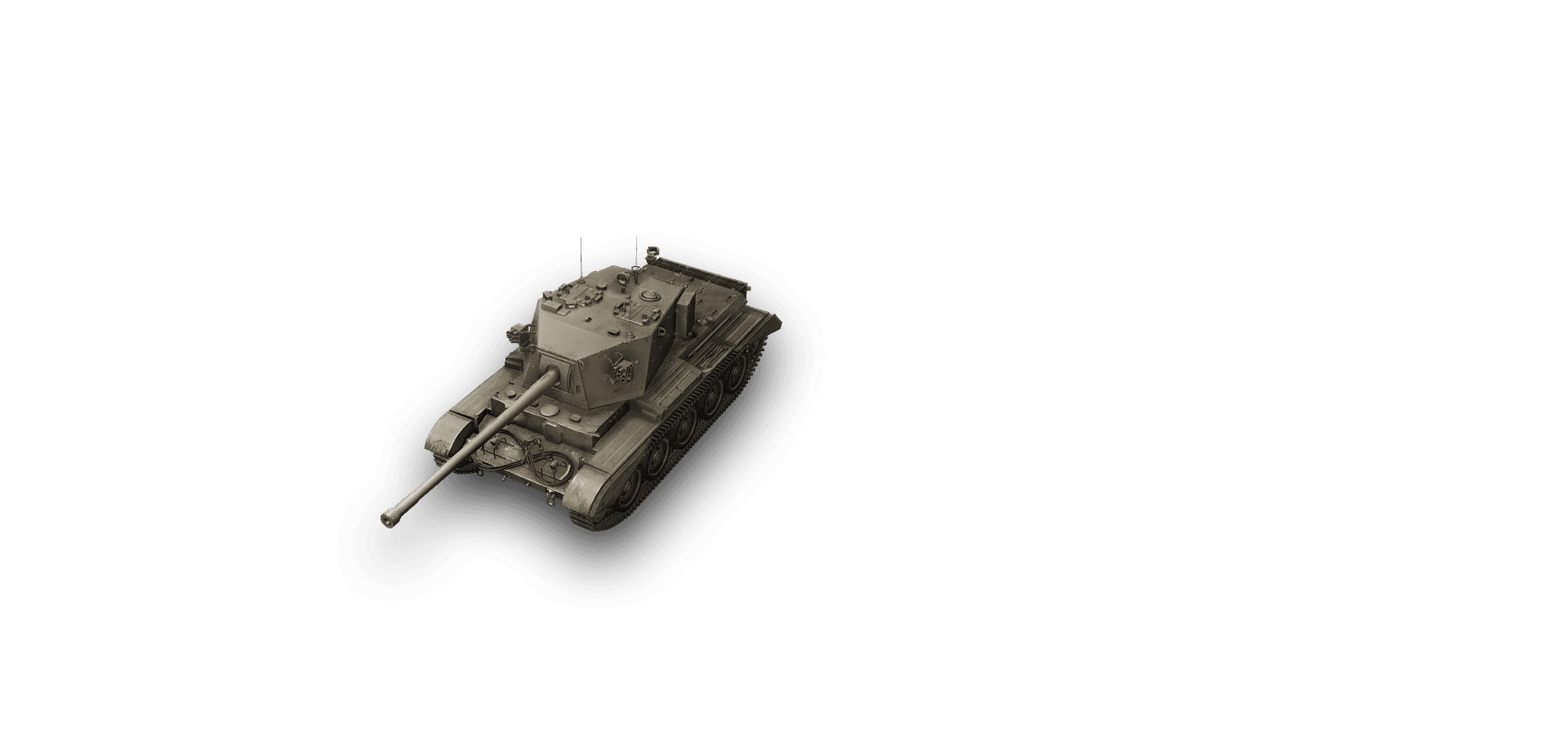
Tank destroyerSupportPremium
SFAC 105
World of Tanks ASIA statistics for the VIII FRANCE tank destroyer SFAC 105.
SFAC 105 characteristics
Firepower
- Damage
- 390hp
- … vs modules
- 150hp
- Penetration
- 270mm
- … at 500m
- 255mm
- DPM
- 2,229
- Reload
- 10.50s
- Rate of fire
- 5.71/min
- Aim time
- 1.70s
- Dispersion
- 0.400m
- … moving
- 0.270
- … hull traverse
- 0.270
- … turret traverse
- 0.150
- … after firing
- 3.00×
- … gun damaged
- 2.00×
- Shell velocity
- 1,415m/s
- Max range
- 720m
- Caliber
- 105mm
- … potential damage
- 15,600hp
- Shell cost
- 893
- … full ammo
- 35,720
Mobility
- Top speed
- 55km/h
- Reverse speed
- 20km/h
- Engine power
- 480hp
- Power/weight
- 19.2hp/t
- Hull traverse
- 35.0°/s
- Turret traverse
- 22.0°/s
- … hard
- 1.00
- … medium
- 1.10
- … soft
- 1.90
- … hard
- 55.0km/h
- … medium
- 55.0km/h
- … soft
- 37.0km/h
- … hard
- 35.0°/s
- … medium
- 31.8°/s
- … soft
- 18.4°/s
Survivability
- Hit points
- 1,100hp
- … front
- 40mm
- … side
- 20mm
- … rear
- 15mm
- … front
- 30mm
- … side
- 15mm
- … rear
- 15mm
- Track armor
- 20mm
- Fire chance
- 20.0%
- Track repair time
- 11.70s
- … ammo rack
- 210 / 158hp
- … track
- 220 / 165hp
- … engine
- 275 / 138hp
- … fuel tank
- 175 / 70hp
- … turret ring
- 155 / 78hp
- … viewport
- 100 / 50hp
Spotting & other
- View range
- 360m
- Signal range
- 570m
- … stationary
- 17.3%
- … moving
- 10.4%
- Weight
- 25.0t
Ammunition
Equipment
Consumables
Directives
Field Modifications
Crew Skills

 Commander / Radio Operator
 Gunner
 Driver
 Loader
 Loader
SFAC 105 modules


SFAC 105 historical reference
After World War II, France received many German designs for armored vehicles, including documentation for tank destroyers of the Waffenträger family, as well as versatile combat vehicles with double-barreled gun systems. As a result of studying the data, the French created a whole family of tank destroyers. One of them was the SFAC 105, which had good mobility and two anti-air guns. However, the project did not reach the prototype phase. Instead of mobile tank destroyers, France began developing self-propelled howitzers.
SFAC 105 videos
No community video for the SFAC 105 yet. Suggest one and it shows up here once a moderator has looked at it.
Tanks like the SFAC 105
Same standing among their own tier- 84%match
 Kanonenjagdpanzer 2VIII
Closest on playstyle and concealment, furthest on gun handling
- 83%match
 CharioteerVIII
Closest on survivability and firepower, furthest on gun handling
- 83%match
 SU-130PMVIII
Closest on playstyle and gun handling, furthest on firepower
- 82%matchKanonenjagdpanzer 105VIII
Closest on playstyle and firepower, furthest on survivability
- 81%match
 AMX Canon d'assaut 105VIII
Closest on firepower and playstyle, furthest on gun handling
- 80%matchLorraine 120 AlbyVIII
Closest on concealment and playstyle, furthest on firepower