
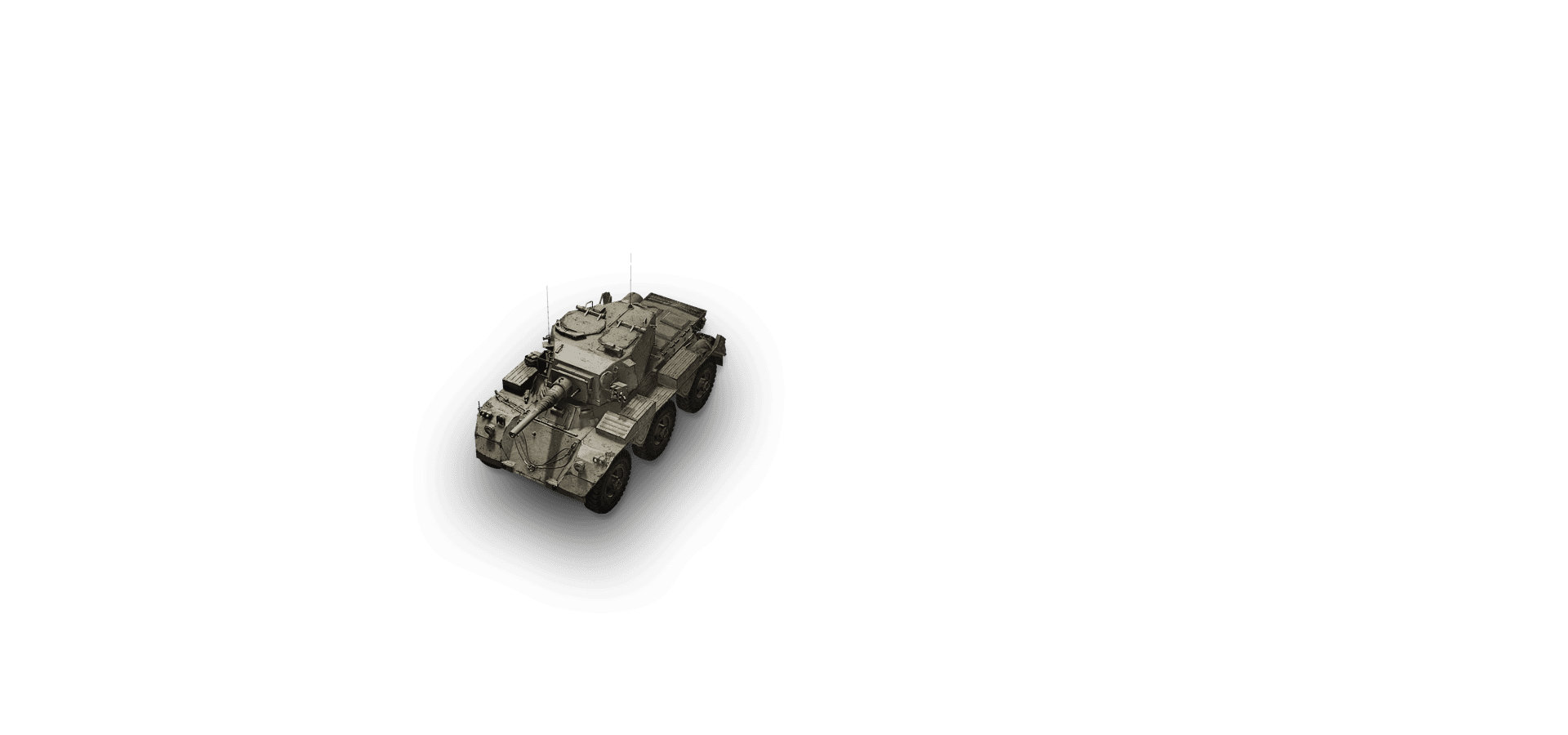
 Medium tankSniper
FV601 Saladin
World of Tanks ASIA statistics for the VIII UK medium tank FV601 Saladin.
FV601 Saladin tech tree branch


FV601 Saladin characteristics
Firepower
- Damage
- 150hp
- … vs modules
- 105hp
- Penetration
- 185mm
- … at 500m
- 160mm
- DPM
- 2,500
- Reload
- 3.60s
- Rate of fire
- 16.67/min
- Aim time
- 1.60s
- Dispersion
- 0.330m
- … moving
- 0.120
- … hull traverse
- 0.120
- … turret traverse
- 0.060
- … after firing
- 3.00×
- … gun damaged
- 2.00×
- Shell velocity
- 930m/s
- Max range
- 720m
- Caliber
- 76mm
- … potential damage
- 9,000hp
- Shell cost
- 215
- … full ammo
- 12,900
Mobility
- Top speed
- 65km/h
- Reverse speed
- 30km/h
- Engine power
- 290hp
- Power/weight
- 25.0hp/t
- Hull traverse
- 28.0°/s
- Turret traverse
- 50.0°/s
- … hard
- 1.00
- … medium
- 1.10
- … soft
- 1.90
- … hard
- 65.0km/h
- … medium
- 65.0km/h
- … soft
- 48.1km/h
- … hard
- 28.0°/s
- … medium
- 25.5°/s
- … soft
- 14.7°/s
Survivability
- Hit points
- 1,380hp
- … front
- 32mm
- … side
- 13mm
- … rear
- 13mm
- … front
- 32mm
- … side
- 13mm
- … rear
- 13mm
- Fire chance
- 20.0%
- Track repair time
- 25.06s
- … ammo rack
- 220 / 150hp
- … track
- 180 / 135hp
- … engine
- 247 / 123hp
- … fuel tank
- 175 / 70hp
- … turret ring
- 140 / 70hp
- … viewport
- 100 / 50hp
Spotting & other
- View range
- 370m
- Signal range
- 550m
- … stationary
- 16.1%
- … moving
- 12.1%
- Weight
- 11.6t
Ammunition
Equipment
Consumables
Directives
Field Modifications
Crew Skills

 Commander / Radio Operator
 Gunner / Loader
 Driver
FV601 Saladin modules


FV601 Saladin historical reference
The FV601 Saladin wheeled armored vehicle, designed by Alvis Car and Engineering Company, was meant to replace the AEC Armoured Car. Work started in 1946, but the practical stage did not begin until the first half of the 1950s. The vehicle's distinctive features were its chassis with 6x6 wheel configuration and its outrigger suspension. The first two prototypes of the FV 601 (B) were produced in 1955. Two years later, a total of six pilot armored vehicles were built, and in 1958, mass production was launched. The armored vehicle was produced until 1972, most often in the Saladin Mk. 2 modification. A total of 1,177 vehicles were built. The vehicle was actively used in the Middle East and Africa.
FV601 Saladin videos
No community video for the FV601 Saladin yet. Suggest one and it shows up here once a moderator has looked at it.