Light tankVersatile
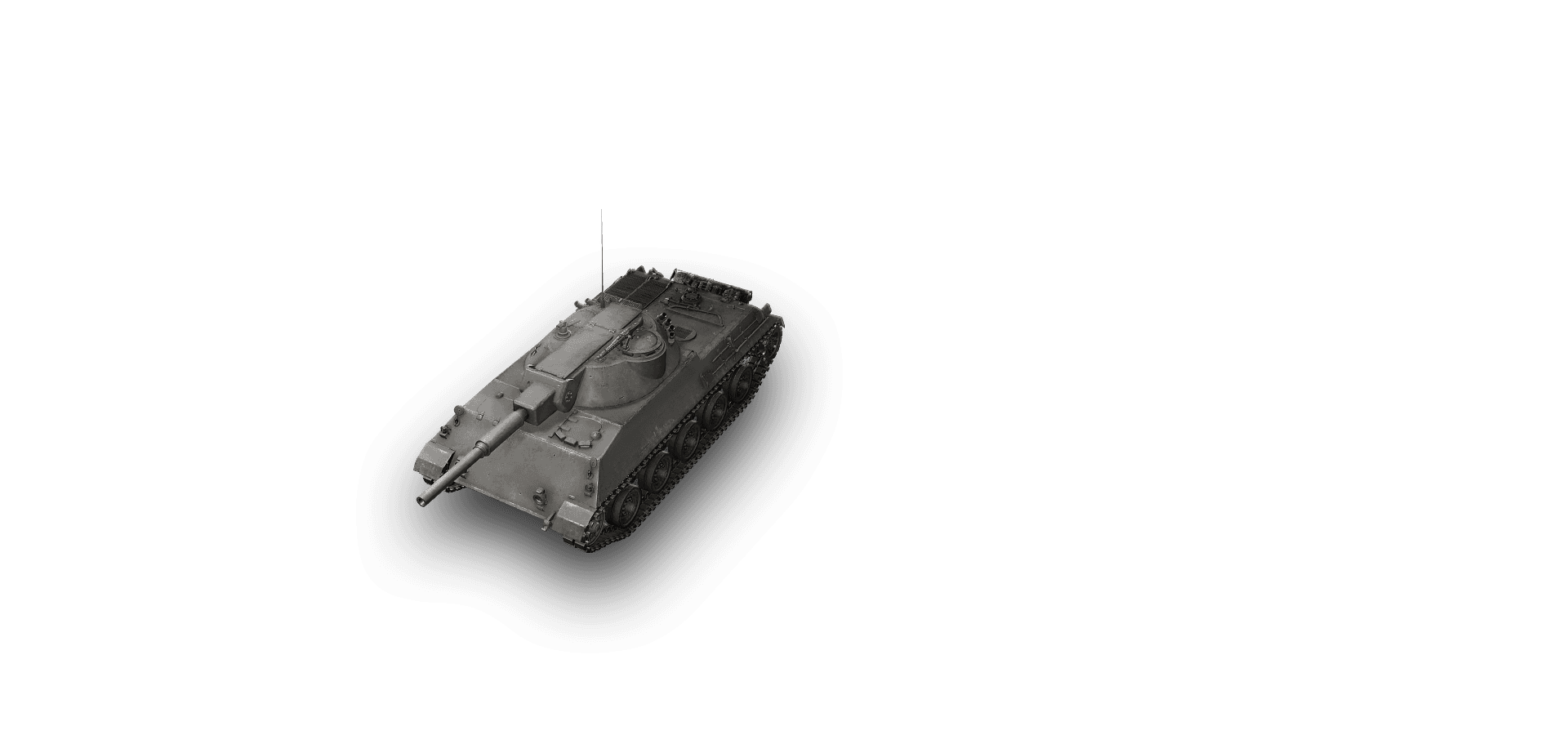
leKpz Borkenkäfer
World of Tanks ASIA statistics for the XI GERMANY light tank leKpz Borkenkäfer.
leKpz Borkenkäfer tech tree branch


leKpz Borkenkäfer characteristics
Firepower
- Damage
- 360hp
- … vs modules
- 150hp
- Penetration
- 256mm
- … at 500m
- 201mm
- DPM
- 2,400
- Reload
- 9.00s
- Rate of fire
- 6.67/min
- Aim time
- 1.40s
- Dispersion
- 0.330m
- … moving
- 0.090
- … hull traverse
- 0.090
- … turret traverse
- 0.060
- … after firing
- 3.00×
- … gun damaged
- 2.00×
- Shell velocity
- 1,250m/s
- Max range
- 720m
- Caliber
- 105mm
- … potential damage
- 12,600hp
- Shell cost
- 1,337
- … full ammo
- 46,795
Mobility
- Top speed
- 72km/h
- Reverse speed
- 25km/h
- Engine power
- 940hp
- Power/weight
- 47.0hp/t
- Hull traverse
- 48.0°/s
- Turret traverse
- 44.0°/s
- … hard
- 0.80
- … medium
- 0.90
- … soft
- 1.80
- … hard
- 72.0km/h
- … medium
- 72.0km/h
- … soft
- 72.0km/h
- … hard
- 48.0°/s
- … medium
- 42.7°/s
- … soft
- 21.3°/s
Survivability
- Hit points
- 1,950hp
- … front
- 50mm
- … side
- 20mm
- … rear
- 15mm
- … front
- 30mm
- … side
- 20mm
- … rear
- 20mm
- Track armor
- 10mm
- Fire chance
- 10.0%
- Track repair time
- 8.00s
- … ammo rack
- 270 / 203hp
- … track
- 260 / 195hp
- … engine
- 380 / 190hp
- … fuel tank
- 225 / 90hp
- … turret ring
- 200 / 100hp
- … viewport
- 130 / 65hp
Spotting & other
- View range
- 420m
- Signal range
- 800m
- … stationary
- 15.8%
- … moving
- 15.8%
- Weight
- 20.0t
Ammunition
Equipment
Consumables
Directives
Crew Skills

 Commander / Radio Operator
 Driver
 Gunner / Loader
leKpz Borkenkäfer upgrades
Click a reachable node to unlock it; each applies its effect to the characteristics above. Colours group nodes by firepower, mobility, survivability and vehicle mechanics.
leKpz Borkenkäfer modules


leKpz Borkenkäfer historical reference
In the 1970s, the Germans began developing a universal chassis for Bundeswehr light tanks. One of the projects with the new chassis was a light tank that was unofficially called the Borkenkäfer ("bark beetle"). The vehicle had a fairly powerful gun (up to 105 mm) and excellent mobility parameters. A fire control system with a dual-channel reticle and two rangefinders ensured high firing accuracy in any weather. Due to the complexity of the FCS, the program was reduced into the PUMA (Panzer unter minimalen Aufwand—tank for minimal costs) project, and then closed. Although the chassis was built, the vehicle only existed in blueprints.
Tanks like the leKpz Borkenkäfer
Same standing among their own tier- 95%match
 Rheinmetall PanzerwagenX
Closest on playstyle and survivability, furthest on gun handling
- 88%match
 WZ-132-1X
Closest on playstyle and concealment, furthest on gun handling
- 88%match
 AMX 13 105X
Closest on survivability and playstyle, furthest on gun handling
- 88%match
 Vz. 71 TesákX
Closest on survivability and concealment, furthest on firepower
- 88%match
 T-100 LTX
Closest on playstyle and concealment, furthest on gun handling
- 86%match
 ManticoreX
Closest on playstyle and concealment, furthest on gun handling