
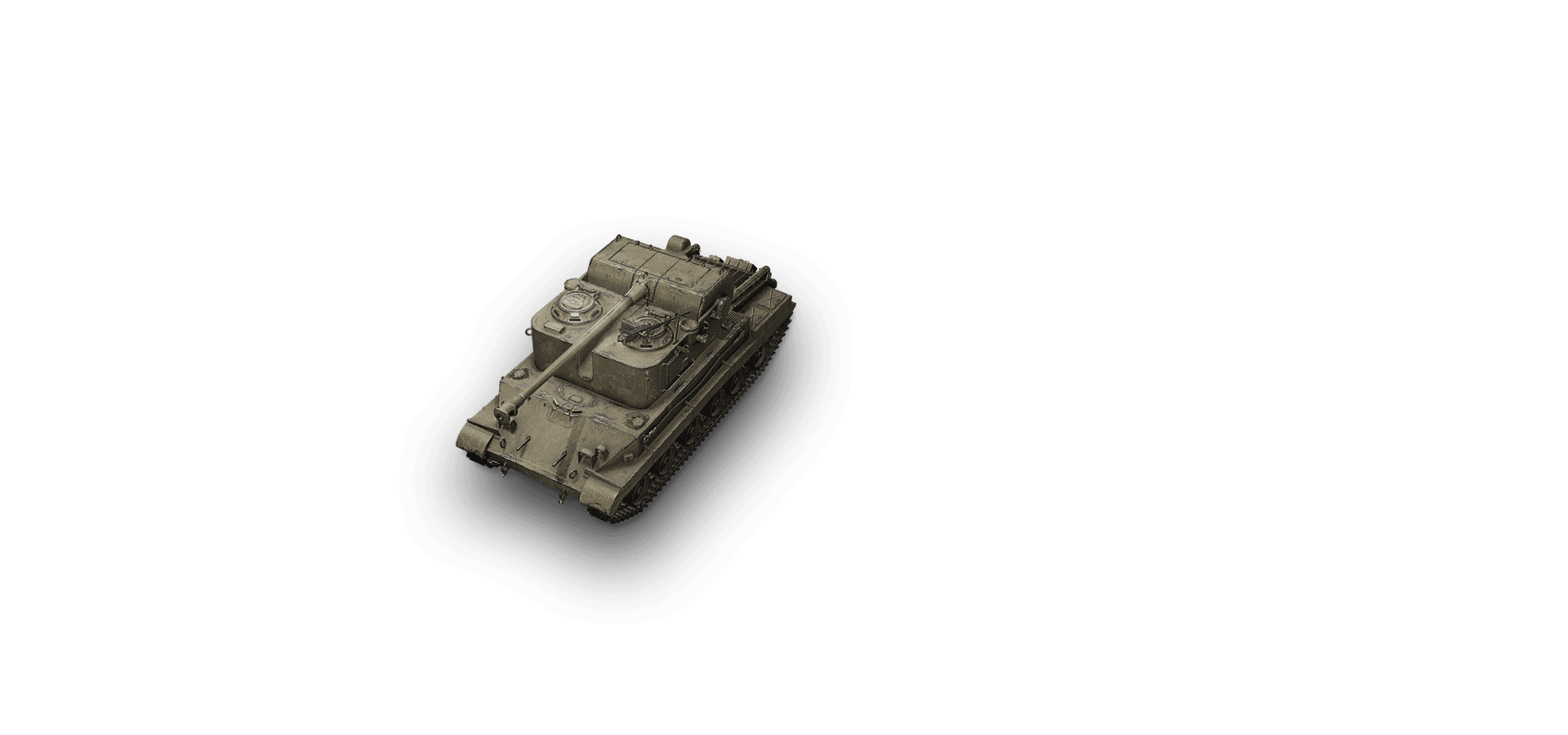
 Medium tankPremium
ARMT
World of Tanks ASIA statistics for the V USA medium tank ARMT.
ARMT characteristics
Firepower
- Damage
- 115hp
- … vs modules
- 105hp
- Penetration
- 128mm
- … at 500m
- 110mm
- DPM
- +1863
- Reload
- 19.00s
- … intra-clip
- 2.50s
- … clip damage
- 345hp
- Rate of fire
- 7.50/min
- Aim time
- 2.10s
- Dispersion
- 0.420m
- … moving
- 0.230
- … hull traverse
- 0.230
- … turret traverse
- 0.150
- … after firing
- 3.00×
- … gun damaged
- 2.00×
- Shell velocity
- 900m/s
- Max range
- 720m
- Caliber
- 76mm
- … potential damage
- 12,075hp
- … full ammo
- 5,880
Mobility
- Top speed
- 45km/h
- Reverse speed
- 18km/h
- Engine power
- 550hp
- Power/weight
- 16.2hp/t
- Hull traverse
- 40.0°/s
- Turret traverse
- 39.0°/s
- … hard
- 1.00
- … medium
- 1.10
- … soft
- 1.90
- … hard
- 45.0km/h
- … medium
- 45.0km/h
- … soft
- 31.1km/h
- … hard
- 40.0°/s
- … medium
- 36.4°/s
- … soft
- 21.1°/s
Survivability
- Hit points
- 600hp
- … front
- 51mm
- … side
- 51mm
- … rear
- 25mm
- … front
- 76mm
- … side
- 51mm
- … rear
- 25mm
- Track armor
- 20mm
- Fire chance
- 20.0%
- Track repair time
- 12.03s
- … ammo rack
- 180 / 120hp
- … track
- 110 / 85hp
- … engine
- 247 / 123hp
- … fuel tank
- 150 / 50hp
- … turret ring
- 100 / 50hp
- … viewport
- 80 / 40hp
Spotting & other
- View range
- 370m
- Signal range
- 410m
- … stationary
- 10.3%
- … moving
- 7.7%
- Weight
- 34.0t
Ammunition
Equipment
Consumables
Directives
Crew Skills

 Commander / Radio Operator
 Gunner / Loader
 Driver
ARMT modules


ARMT historical reference
The development of the ARMT tank was based on the creation of an automated loading mechanism that would provide a rate of fire previously considered unattainable. This was made possible by the autoreloader, which delivered quick-firing rounds driven by a planetary gear mechanism and an electric motor. The innovative turret design allowed the gun to fire at an elevation of about 60 degrees and a tilt angle of about -15 degrees. The removal of the loader from the crew was also a tempting idea. In addition to the high complexity of production and the difficulties in maintaining the autoreloader, the tank was notable for its height and vulnerability. Its 75–76 mm gun was obsolete for fighting advanced Soviet tanks. At the same time, attempts to mount a 90 mm gun would have resulted in a significant increase in weight and a complete revision of the design, which was ultimately never built.
ARMT videos
No community video for the ARMT yet. Suggest one and it shows up here once a moderator has looked at it.