
Cost7,800(~SGD 44.35)
VIII Medium tankSupportPremium
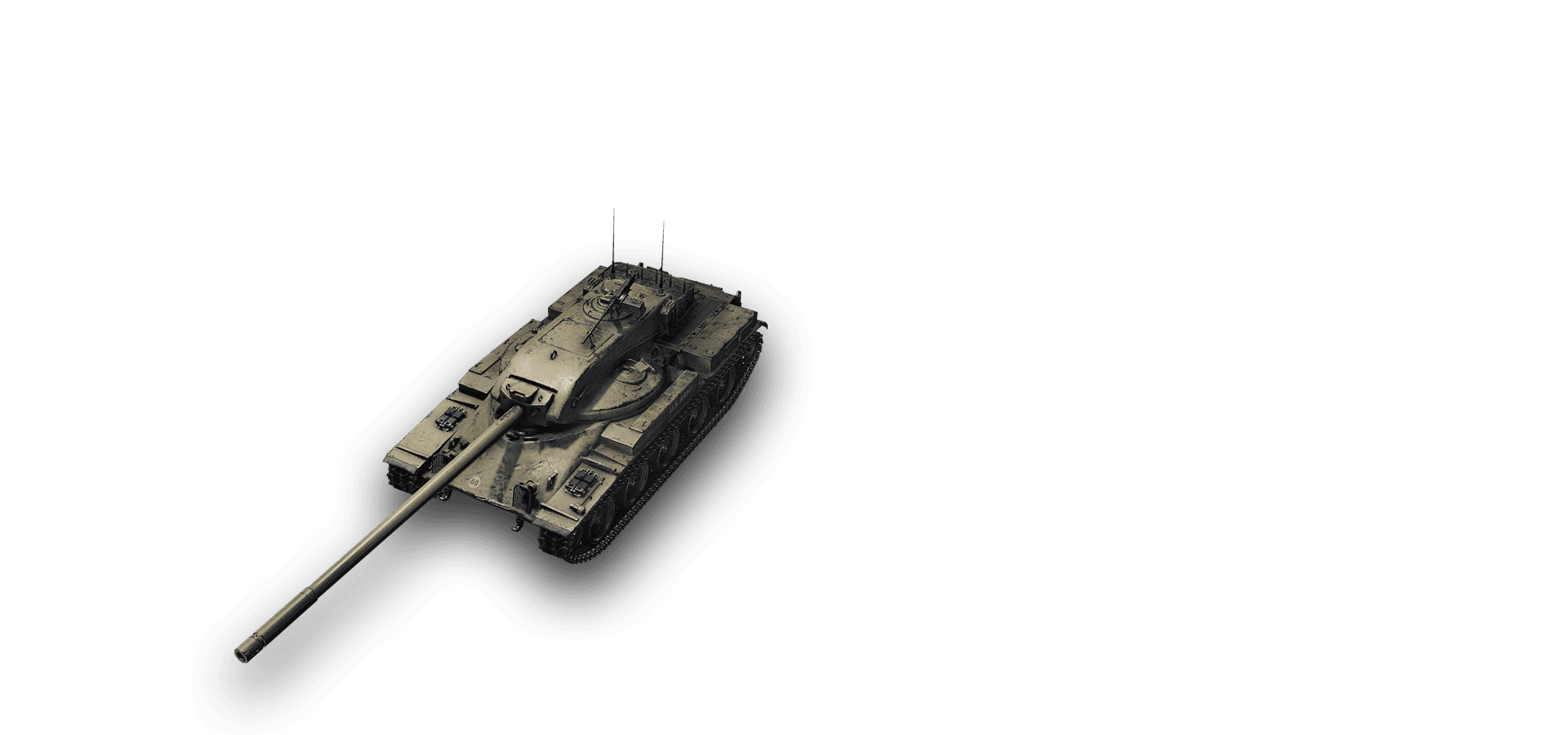
Medium tankSupportPremiumAAT60
World of Tanks ASIA statistics for the VIII USA medium tank AAT60.
AAT60 characteristics
Firepower
- Damage
- 320hp
- … vs modules
- 150hp
- Penetration
- 230mm
- … at 500m
- 218mm
- DPM
- 2,207
- Reload
- 8.70s
- Rate of fire
- 6.90/min
- Aim time
- 2.00s
- Dispersion
- 0.350m
- … moving
- 0.120
- … hull traverse
- 0.120
- … turret traverse
- 0.100
- … after firing
- 3.50×
- … gun damaged
- 2.00×
- Shell velocity
- 1,150m/s
- Max range
- 720m
- Caliber
- 105mm
- … potential damage
- 19,200hp
- Shell cost
- 1,065
- … full ammo
- 63,900
Mobility
- Top speed
- 44km/h
- Reverse speed
- 22km/h
- Engine power
- 750hp
- Power/weight
- 17.4hp/t
- Hull traverse
- 40.0°/s
- Turret traverse
- 45.0°/s
- … hard
- 0.90
- … medium
- 1.10
- … soft
- 1.90
- … hard
- 44.0km/h
- … medium
- 44.0km/h
- … soft
- 33.6km/h
- … hard
- 40.0°/s
- … medium
- 32.7°/s
- … soft
- 18.9°/s
Survivability
- Hit points
- 1,400hp
- … front
- 70mm
- … side
- 50mm
- … rear
- 25mm
- … front
- 150mm
- … side
- 50mm
- … rear
- 30mm
- Track armor
- 20mm
- Fire chance
- 10.0%
- Track repair time
- 10.03s
- … ammo rack
- 240 / 160hp
- … track
- 200 / 150hp
- … engine
- 260 / 130hp
- … fuel tank
- 175 / 70hp
- … turret ring
- 150 / 75hp
- … viewport
- 100 / 50hp
Spotting & other
- View range
- 390m
- Signal range
- 745m
- … stationary
- 15.7%
- … moving
- 11.7%
- Weight
- 43.0t
Ammunition
Equipment
Consumables
Directives
Field Modifications
Crew Skills
Crew level100%

 Commander
 Gunner
 Driver
 Loader / Radio Operator
AAT60 modules

IX105 mm T141E5 ATStock

VIIIAAT60Stock

VIIIGeneral Motors 12V71TStock

VIIIAAT60Stock

XAN/GRC-7Stock

VIIIAAT60
AAT60 historical reference
In 1962, Joseph Williams and Clifford Bradley proposed a project for a vehicle featuring an unusual fighting compartment configuration. The vehicle was designated AAT60. Its gun was mounted in a small inhabited turret, while the crew was located below. The Commander was located rather high up, right behind the gun. The design allowed the size of the vehicle's front to be decreased, making it comparable to vehicles with uninhabited turrets. Even though the AAT60 project existed only in blueprints, some design solutions were adopted for the M60A2 American tank.
AAT60 videos
No videos yet
No community video for the AAT60 yet. Suggest one and it shows up here once a moderator has looked at it.